Cash on delivery — what it is and how COD works

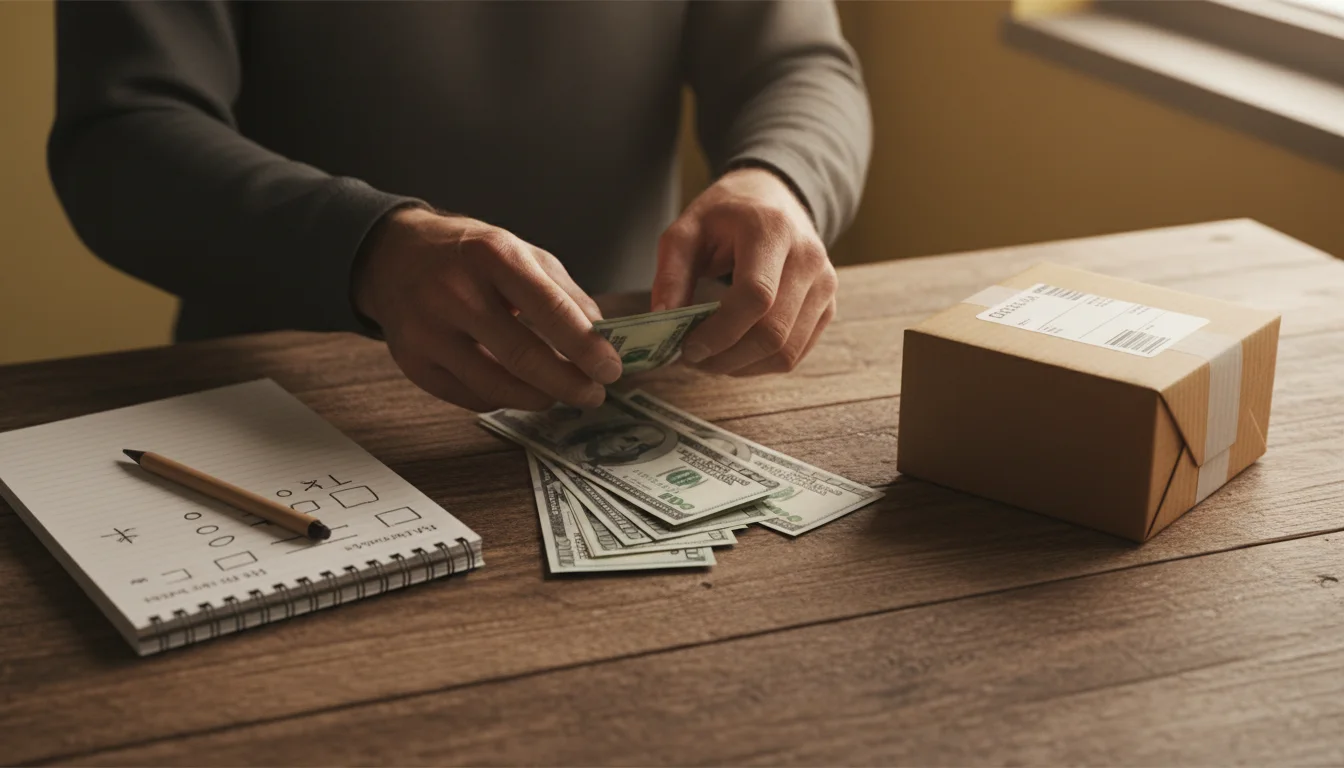
Cash on delivery, or COD, is payment upon receipt: the customer doesn't pay upfront but when they pick up the parcel at a branch or locker. The seller ships the goods, the postal service collects payment from the customer, and forwards it to the seller. Below is how it works step by step, who pays what for the transfer, and what makes COD profitable and risky for sellers.

Create Landing Page for FreeNo registration. Pro for 7 days free — when you save your landing page.

What is cash on delivery? Explanation without jargon

For customers, COD is a way to buy from an unfamiliar seller without prepayment risk. They see the parcel at the branch, can inspect it, and only then pay. Don't like it — don't pick it up.

For sellers, it's a way to get orders from people not ready to prepay an unknown store or social media page. Money comes not right away but after the customer picks up the parcel and the postal service transfers the payment.

"Післяплата" and "накладений платіж" are synonyms. With a delivery service, NovaPay transfers the money for the goods; with the post office, the post office itself does. The post office is the intermediary between buyer and seller, and it also charges a transfer fee.

How cash on delivery works: step by step

The process is the same for any carrier — only rates and service names differ. From lead to money in your account takes several stages, and an order can drop off at any point — that's why in single-product e-commerce we count not just leads but pickup rates too.

The weakest point is the time between dispatch and receipt. While the parcel is in transit and waiting at the branch, the buyer might change their mind, find a cheaper option, or simply forget. At the delivery service branch, the parcel waits for 7 calendar days free of charge (the day of arrival is not counted); after that, storage is paid.

  • Customer submits a lead: name, phone, city, and branch.
  • Seller confirms the order by call or message and processes the shipment with the COD amount.
  • Parcel travels to a branch or locker; customer gets a notification.
  • Customer inspects the parcel, pays for the goods and, if agreed, for shipping and transfer.
  • Postal service transfers money to the seller's card or account.
  • If the customer doesn't pick up the parcel, it returns to the sender.

Who pays what for cash on delivery

The postal service charges a fee for the transfer. Who pays depends on the carrier and whether the seller has a contract.

A hypothetical example for an item priced at $19 from a private seller without a contract: a cash-paying buyer will pay 2% + $0.5 = $0.9 for the transfer, while with a NovaPay card, it's 1% + $0.2 = $0.4. At the post office, for the same amount, it will be 2% + $0.4 = $0.7. Delivery is paid separately according to the carrier's rates.

Rates change, so verify them on the carrier's website or app before launching. You can calculate your amount free with LandEmpire's COD commission calculator.

  • delivery service, seller without contract: buyer pays the transfer — 2% + $0.5 with cash or another bank's card or 1% + $0.2 with NovaPay card.
  • postal service: COD transfer — 2% + $0.4 with VAT, usually paid by the recipient upon pickup; confirm when placing an order.
  • FOP and LLC with a "Payment Control" contract: the seller pays the full fee or splits it with the customer — depends on the plan.

Delivery service COD: how it works and how "Payment Control" differs

Standard cash on delivery — for private sellers without a contract: money goes to a card, and the customer pays the transfer fee.

"Payment Control" — for sole proprietors (FOP) and LLCs with a contract, money is credited to a settlement account. There are two plans. "Standard": the seller pays all commission — 2,5% to a NovaPay account or 3,3% to an account in another bank; the buyer does not pay for the transfer. "Universal": the seller pays 0,5% (NovaPay account) or 1,3% (another bank), the buyer pays 1% + $0.2 with a NovaPay card or 2% + $0.5 with cash or another bank's card.

There's also "Secure Purchase": the buyer pays via NovaPay, and the seller receives the money after the buyer picks up the product and confirms everything is in order. If not, the money is returned to the card. For details on the agreement and tariff selection, see the "Payment Control Delivery Service" page.

Pros and cons of cash on delivery for sellers

Cash on delivery removes the buyer's main objection — the fear of paying and receiving nothing. That's why it's standard in single-product e-commerce and affiliate media buying in your country: without it, some people simply won't place an order.

The flip side is unclaimed parcels. A buyer who didn't pay upfront can easily change their mind, but the seller's costs for ads, packaging, and delivery are already spent. If the buyer was supposed to pay for delivery and refuses, the one-way delivery cost usually falls on the sender. The "Return Shipment" service itself for parcels up to 30 kg is not charged separately — it's included in the main service tariff.

  • Plus: higher trust — the buyer doesn't need to pay a stranger upfront.
  • Plus: no need to accept payment on the site — the postal service collects the money.
  • Minus: unclaimed parcels eat into your ad and delivery budget.
  • Minus: money arrives only after the parcel is received; goods and working capital are "in transit."
  • Minus: transfer commission — if the buyer pays it, that's another reason to refuse; if the seller pays, it cuts into margin.

How to sell with cash on delivery and lose less to unclaimed parcels

Unclaimed parcels are factored in before shipping: in ads, on the product page, and during order confirmation. The clearer the buyer understands what they're getting and for how much, the less likely they'll refuse at the post office.

Calculate unit economics per batch of orders, not per single sale: profit = completed orders × margin − unclaimed parcels × loss per refusal − ads. LandEmpire has a free unit economics calculator for single-product e-commerce for this.

If you sell via a landing page, LandEmpire's order form validates local mobile numbers to filter out spam, and you can customize city and delivery service branch fields. Leads are immediately sent to Telegram or your CRM, and analytics show their source, campaign, and sub1 tag. Learn how to build such a landing page in the article "Landing Page with Cash on Delivery."

What's not here

LandEmpire is not a mail or payment service: we do not accept money from buyers, process cash on delivery, create waybills, or integrate with delivery service APIs. Landing pages do not support card payments, we do not have a call center for order confirmation, and we do not guarantee pickup or approval rates. Our part is the landing page, order form, lead delivery to Telegram, CRM, or CPA network, and analytics. Carrier rates in the text are for reference only—verify them before launch.

Frequently asked questions

What is cash on delivery in simple terms?

It's payment for goods upon delivery. The buyer pays at a branch or parcel locker when picking up the package, and the postal service transfers the money to the seller, deducting a transfer commission.

Who pays the COD commission at the delivery service?

If the seller is a private individual without a contract, the buyer pays the transfer fee: 2% + $0.5 cash or another bank's card, or 1% + $0.2 with a NovaPay card. In "Payment Control" for sole proprietors and LLCs, the seller pays the commission in full ("Standard") or splits it with the buyer ("Universal").

Are cash on delivery and COD the same thing?

Yes, they're synonyms: payment for goods upon parcel delivery. The tariffs and conditions of each carrier differ, not the service itself.

What happens if the buyer doesn't pick up a cash on delivery parcel?

At the delivery service, a parcel is stored free of charge for 7 calendar days; after that, daily fees apply. If it's never picked up, it's returned to the sender: for parcels up to 30 kg, return shipping is not charged separately, but the one-way delivery cost, which the buyer should have paid, is usually paid by the sender. More details are on the page "Refusal of parcel by delivery service."

How does COD work at the post office?

Same way: the buyer pays upon delivery, and the postal service transfers the money to you. The transfer costs 2% + $0.4 including VAT, and typically the recipient covers it—confirm when placing your order. Learn more on the "mail cash on delivery».

Read more about this

All articles →

Other topics

Try it now

Paste your product link — get a ready-made landing page in a minute. No sign-up needed.

Prom, AliExpress, Amazon, or any store. No registration needed — see results instantly.AliExpress, Amazon, eBay, or any store. No registration needed — see results instantly.

Create Landing Page for Free

No registration. Pro for 7 days free — when you save your landing page.