Landing page reviews: how to write them so people believe them

Added reviews to your landing page but conversion rate didn't budge? They probably look like templates. Let's break down how to write social proof that people actually trust and that genuinely boosts your approval rate.
Reviews appear on nearly every other single-product landing page, but most of them don't work. Not because buyers don't trust reviews — but because these texts immediately read as made up. This article breaks down the mechanics: how to structure review text so it closes objections and actually lifts conversion.
Why "Love the product, highly recommend!" doesn't sell
When someone reads a review on a single-product landing page, they unconsciously ask one question: "Is this like my situation?" A generic phrase with no details doesn't match anyone's situation. It doesn't trigger recognition, doesn't address a specific fear, and doesn't provide any information the seller wouldn't write themselves.
Compare two versions:
"Great cream, skin got softer. Thanks!"
versus
"Ordered it for my hands — my skin was cracking from working in the cold. After a week I noticed a difference, after two weeks the cracks healed almost completely. Delivery came on day three, the courier called ahead."
The second review contains: a problem, a timeframe for results, and a delivery detail. It closes three typical objections at once — "will it work for me?", "how fast?", "do they actually deliver properly?" That's what social proof should look like on a landing page.
What to do today: Go through your current reviews and delete any that don't have at least one specific detail. Three strong reviews beat ten empty ones.
Review structure that addresses objections
A good review for a single-product landing page follows simple logic: situation → doubt → result → detail. You don't need all four blocks — but at least three.
- Situation — who this person is and why they bought. "Looking for a gift for mom's 60th birthday", "bought it to lose weight after giving birth", "ordered for myself because my knee hurts after workouts".
- Doubt — what held them back or what surprised them. "Didn't believe it would work at first", "thought it would be cheap knockoff", "worried it wouldn't arrive in time for the holiday".
- Result — specific, with a time or quantity detail. "Lost 4 cm from my waist in two weeks", "wearing it for three months now, hasn't fallen apart", "arrived 2 days before the birthday".
- Detail — something you can't make up: the color of the packaging, what the courier said, whether the size matched the chart.
This structure doesn't just make the text convincing — it literally closes objections on the landing page, because each block answers a separate buyer concern.
On length: optimal is 4–7 sentences. Shorter won't build enough trust, longer won't get read.
What to do today: Take your most popular product, list 5 main buyer objections, and write one review for each using this structure.
How to collect real reviews you can actually use
The easiest source is Viber or Telegram after delivery. Message the buyer: "How's the product? If all good — write a few words, it matters to us." Most reply briefly, but even "all good, arrived fast" is material to work with.
Then you don't make it up, you edit: take the real feedback and expand it to fit the structure. If someone wrote "all ok, recommend" — call or message back with follow-ups: "What did you buy it for? How long have you been using it? What did you like most?" Three questions give you three blocks.
On photos: an avatar and name boost trust noticeably. Doesn't have to be a real photo — a neutral portrait and a name with city works. "Oksana, Kharkiv" reads as a real person. "User 4821" doesn't.
If you have no reviews yet — run your first 20–30 sales at cost or minimal margin, but make sure to collect feedback. It's an investment in conversion rate for all future campaigns.
What to do today: Set up a simple automated messenger reply on day three after delivery confirmation with two questions about the product.
Where and how to place reviews on your landing page
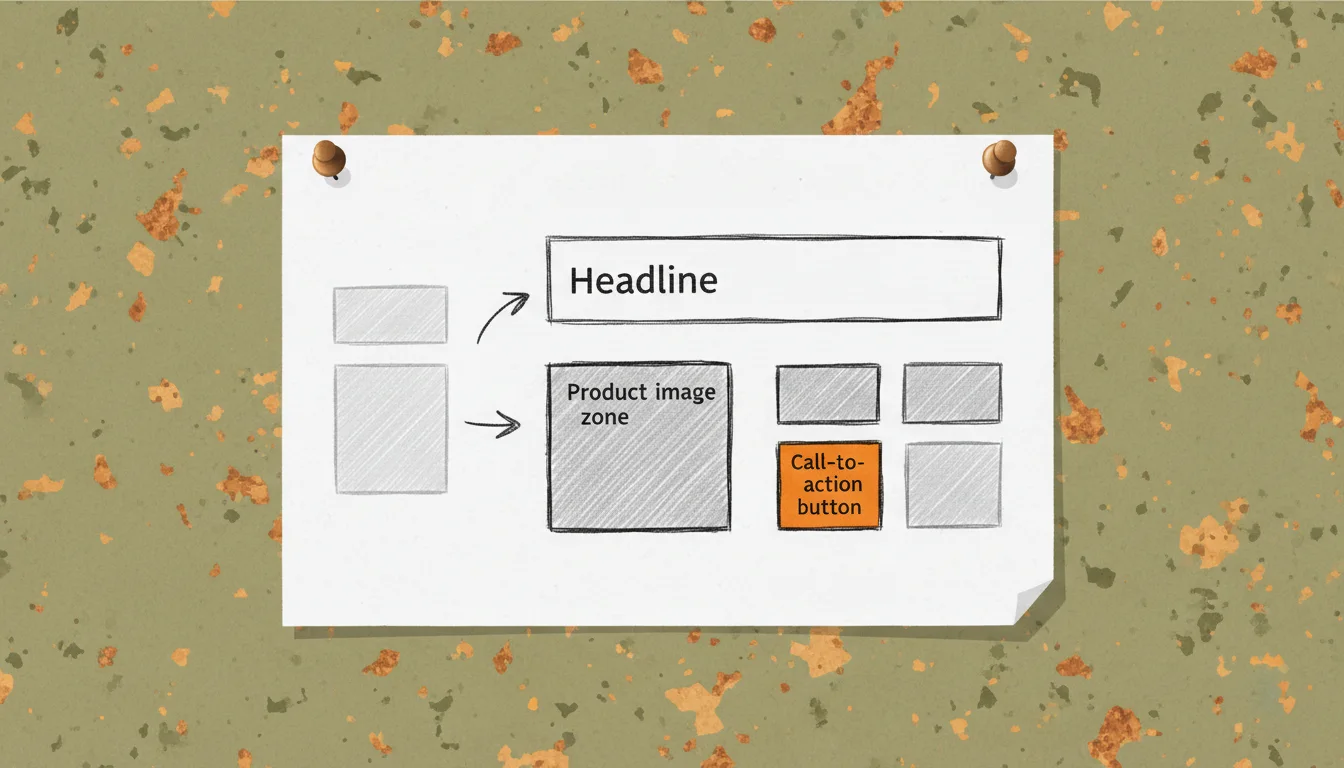
Reviews on a single-product landing page should go after the product description block and before the CTA button — or right after the first screen if the page is short. The logic is simple: first the person understands what the product is, then they see confirmation from others.
A few placement rules:
- No more than 3–5 reviews in one block. More than that won't get read, and the block starts looking like fake engagement.
- Mix gender and age. If all reviews are from "Elena, 34 years old" — that's suspicious.
- First review should be the strongest. The one that closes the main objection about the product.
- If you have chat screenshots — use them instead of or alongside text reviews. A Viber message screenshot gets more trust than any text.
When testing multiple landing page versions — for example, in LandEmpire — separately test versions with different reviews in the first slot. The difference in conversion rate between a "neutral" and an "objection-closing" review in first position can be 3–5 percentage points, which at a $120/day budget and $2.9 cost per lead makes a noticeable difference.
What to do today: Check your current review placement — is the strongest one first, and is there variety among the "authors".
Common mistakes that immediately expose fake reviews
Even if a review is written with the right structure, a few details can destroy trust:
- Too polished language. Real people write "arrived fast," not "delivery was completed within expedited timeframes."
- Praising things that don't matter to buyers. "Nice packaging" for a pain relief patch isn't an argument.
- All reviews are 5/5 stars. One 4-star review with a note like "waited a bit longer, but the product is worth it" — boosts trust in the rest.
- Results without numbers. "Lost weight" doesn't convince. "Lost 3 kg in a month" — does.
- Same tone across all reviews. If every review reads the same way — it shows.
One genuine review with a small negative detail ("packaging got a bit crumpled, but the product itself is fine") raises trust in the whole block. Perfection is a red flag.
What to do today: Read your reviews out loud. If none sound like a real person — rewrite them.
Summary
- Delete all vague reviews — they don't help and hurt trust.
- Build each review this way: situation → doubt → result → detail.
- Collect real reviews via messenger on day three after delivery, edit them, don't make them up.
- Place 3–5 reviews after the product description, leading with the one that addresses the main objection.
- Add one 4-star review and include at least one small negative detail — it boosts trust in the whole block.
How it's done in LandEmpire
Build a landing page like this yourself — in one evening
LandEmpire has ready-made templates for single-product e-commerce, leads go straight to Telegram, your domain connects in minutes, and UTM analytics show exactly where each lead came from. The starter plan is free — no card required to get started.
Create a landing page for free